Date Published: 16/12/2025
Winter solstice 2025: This Sunday is the shortest day of the year as winter starts in Spain
December 21 is the start of astronomical winter and from that date onwards, the days will start getting longer in Spain
Anyone who has been enduring Spain's recent miserable weather and dreary short days can take heart as this Sunday marks the winter solstice, and from that moment onwards, daylight hours will finally start getting longer again.
The solstice arrives in Spain at precisely 4.03pm on December 21, marking the shortest day and longest night in the northern hemisphere. After the recent rain, thunderstorms and blustery winds, it’s a milestone many of us have been eagerly anticipating.
The word ‘solstice’ comes from the Latin sol, meaning sun, and sistere, meaning to stand still. It describes the moment when the sun appears to pause in its journey across the sky, sitting directly above the Tropic of Capricorn at its most southerly point of the year.
For those in the southern hemisphere, this brings their longest day and the sun at its highest angle. For us in the north, it means the least sunlight and consequently the maximum amount of darkness we will experience all year.
The reason we have solstices at all is down to the Earth's somewhat wonky angle. Our planet is tilted on its axis by 23.5 degrees, which affects which part of the surface receives direct sunlight at any given time. This tilt is also why the date of the solstice can vary slightly from year to year.
Earth takes around 365.24 days to complete an orbit around the sun, not an exact year. The timing of the solstice therefore slips by about six hours each year, adding up to a full day over four years. When this happens, we have a leap year with an extra day in the calendar, allowing the solstice to revert to its earlier date. Other factors that influence the timing include variations in the length of the Earth's orbit and a wobble in its axis caused by rotation.
Once the solstice passes, the sun begins its journey north again relative to the equator. Six months later it will reach its most northerly point, directly overhead the Tropic of Cancer, giving us
the summer solstice. Midway between the two solstices come the equinoxes, when the sun sits directly over the equator.
The amount of daylight on the solstice depends on latitude. The further north you are, the shorter your day will be. Incredibly, within the Arctic Circle, down to a latitude of 23.5 degrees from the North Pole, the sun will not rise at all on Sunday.
Whether the solstice actually marks the start of winter depends on your perspective. Meteorological winter began on December 1, approximately three weeks before the solstice, and runs until the final day of February. Weather forecasters divide the year into four equal chunks of three months each, with spring running from March to May, summer from June to August and autumn from September until November.
Astronomical seasons, on the other hand, are defined by Earth's position in its orbit, marked out by the solstices and equinoxes. By this measure, Sunday is officially the first day of winter.
Either way, the arrival of the solstice brings good news for anyone weary of dark mornings and early sunsets. From Monday onwards, each day will bring a little more light, inching towards the brighter months ahead.
Have you ever looked up at the sky and wondered what’s out there to see? Do you ever feel the desire to get lost, floating along the milky way? Or maybe you’re just looking for something a bit different to do this weekend?
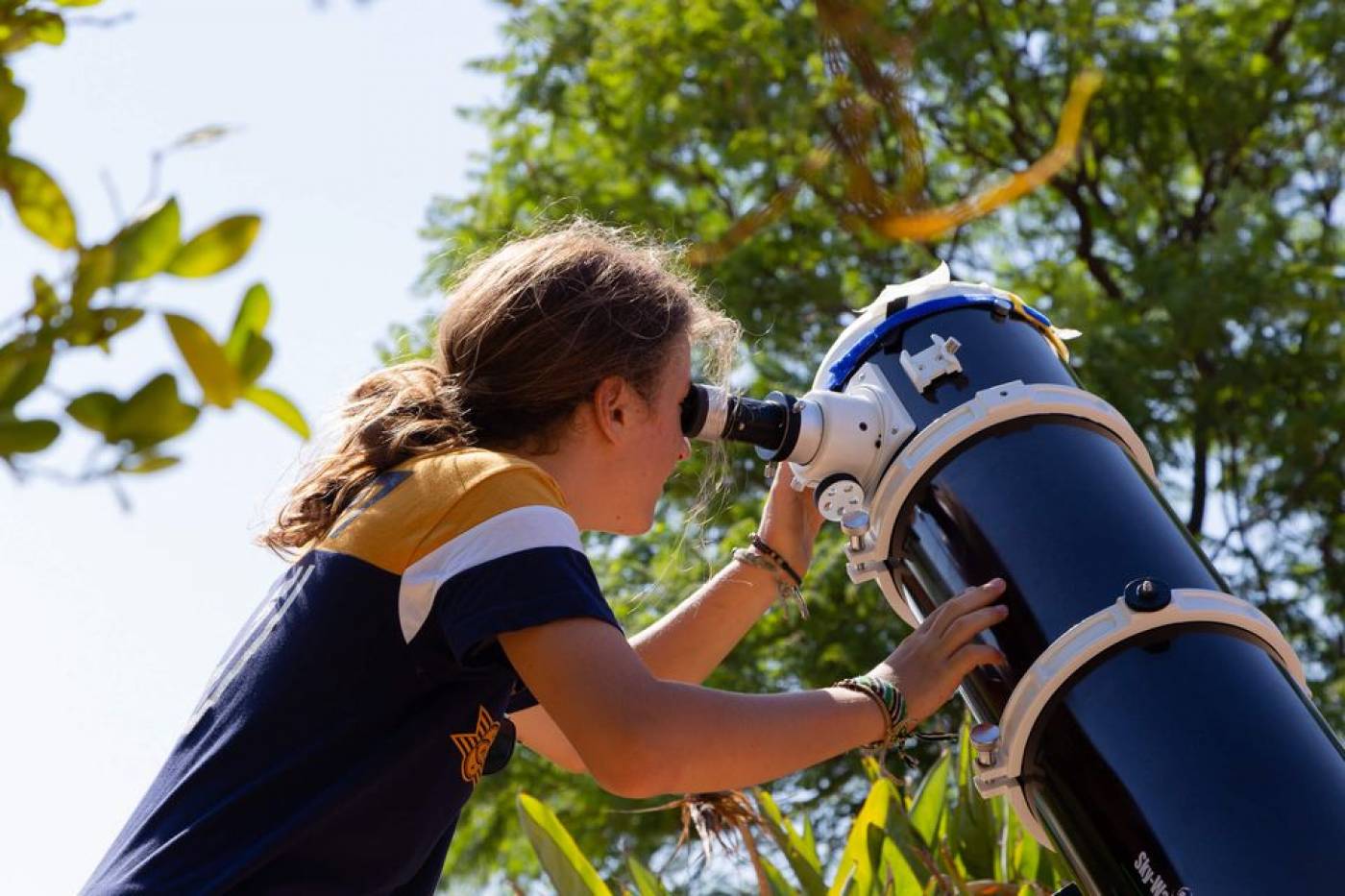
Try out an Astronomy Tour at the Finca Astronomica in the Campo de Cartagena in Murcia! The Finca Astronomica is a place where families and friends can spend quality time together close to nature to learn about astronomy.
Contact the Finca Astronomica to visit for a daytime or nighttime Astronomy Tour, or book one of their cruises under the stars:
Image: Freepik
article_detail

|
Address
Casas del Puente 3, Cartagena, Murcia, Spain, 30397
Tel: +34 623 140 902
Loading
The Astronomy and Science Centre Foundation has star-themed events and activities to delight novices and experts of all ages
Astronomy Tours runs a whole host of astronomical activities and events in the Murcia Region, from astronomical observation sessions to a magical cruise under the stars, to really fire up an interest in the cosmic world beyond our atmosphere.
Their main base of operations is the Finca Astronomica, located close to the town of La Aljorra in the Campo de Cartagena, where you can join their astronomy tours either in the daytime or at night, all year round.
At the Finca, you’re welcomed with delicious food, drinks, a bonfire and a variety of astronomical tools and gadgets. In the summer season, they also have tours in other locations, including San Pedro del Pinatar, La Manga and Camposol, not to mention their unmissable cruise under the stars, which involves a nighttime cruise on the Mar Menor with tapas and drinks, plus a guided presentation of the night sky as you watch the galaxy glide by.
The Astronomy Tours and the Finca Astronomica are supported by the Astronomy and Science Centre Foundation, which was founded in 2019 by a group of astronomers and Starlight-certified guides and monitors in the astronomical observatories in Spain.
The purpose of the Foundation is to promote the knowledge and interest in the field of astronomy and astronomy-related sciences, which covers areas such as physics, chemistry, biology, geology, but also history, archeology, urban and medical aspects of social life, literature, art, culture and (of course) astrology.
By promoting this knowledge and getting their customers interested in astronomy, the Foundation hopes to achieve higher goals such as bringing the stars a little closer to people, and helping them to understand the importance of caring about our planet and the whole human population as a one.
To achieve those goals, the Foundation organises its day- and nighttime activities and camps which are suitable for both children and adults, and as well as this they work with
schools and organisations and write books for children to bring astronomy to the masses.
As part of this mission, they’re creating an astronomically themed park right on the Costa Cálida called the Astronomy and Science Centre which has an observatory available to the public to see the stars and the planets, and where they also promote ecofriendly and sustainable activities and closeness to nature.
The Finca Astronomica even has its own friendly and well cared for animals which live in really big spaces where people can easily enter and interact with them in their own environment.
What’s more, you can get involved in all sorts of other fun and activities for all the family at the Finca Astronomica, including glamping under the stars, stroking the animals at their petting zoo and enjoying sports like darts, archery, nerf gun fights, and many more.
This year, Finca Astronomica is excited to unveil its very own Yurt Village. Alongside the beautifully crafted wooden glamping pods, the yurts combine traditional charm with all the modern comforts including double beds, cosy carpets and plenty of shelving for your personal belongings.
But that’s not all. Each yurt comes handily equipped with light and electricity, so that you can charge your devices even as you recharge your spirit under the vast, starry sky.
This summer season is about to come alive with regular tours happening three days a week, while Adult Only Fridays are just around the corner.
Tours are available in English, Spanish and Polish.












 Spanish News Today
 Alicante Today
 Andalucia Today