Spanish News Today Editors Round-Up Weekly Bulletin September 11
TOP STORIES: "New EU charge coming for Shein and Temu parcels" & "Storm chaos sweeps across Spain as torrential rain triggers widespread flooding"
It's been a difficult week for parts of Spain, with dramatic storms bringing flooding to the Balearic Islands, Cataluña and Murcia, and the wildfire death toll in Almería sadly continuing to rise. Our thoughts are with everyone affected.
On a lighter note, there's still plenty else going on this week. A new EU fee is about to make your online shopping habit a bit pricier, there are big changes coming to how you get around on Spain's trains and planes, and property prices are still on the way up. Oh, and bullfighting is back in the headlines too, because no week in Spain would be complete without a good debate.
Grab a coffee and let's get into it.
Duty calls

This one's separate from the €3 customs charge that already hit low-value goods back on July 1, so yes, that's another cost stacked on top for anyone who loves a cheap online haul.
Nobody knows exactly how much the new fee will be just yet. Officials floated a figure of around €2 per item during negotiations, but the European Commission hasn't confirmed that's the final number, and it's expected to settle on a figure closer to the November deadline.
The idea behind it, according to Brussels, is to cover the cost of processing the sheer number of small packages flooding into the EU every single day, checking what's inside, working out the risk level and running customs checks where needed. It's less about squeezing shoppers directly and more about making the platforms themselves pick up the tab, since sellers and marketplaces will now be responsible for sorting out customs formalities and paying duties, rather than leaving it all to whoever clicked "buy" at 11pm.
That said, don't get too excited. Platforms passing extra costs onto customers through higher prices or delivery fees is a very real possibility, so that cheeky bargain buy could end up costing more one way or another.
Worth remembering that the €3 charge already in place since July 1 isn't a flat one-off either. It applies per product category, so a single order with a mix of items, say some jewellery and a phone accessory, could rack up more than one €3 charge in one go.
So why's the EU bothering with all this? Mostly because the scale of cheap online shopping has exploded. Something like 5.9 billion low-value parcels came into the EU through e-commerce in 2025 alone, and roughly 93% of them came from China, according to the European Commission's own figures. Brussels reckons that volume makes it much harder to keep on top of customs checks, and raises the risk of dodgy products that don't meet EU safety standards slipping through, while also putting European sellers at a disadvantage.
On top of all this, there's more change coming in 2028, when a new EU Customs Data Centre comes online. From that point, online marketplaces will officially be treated as importers, meaning they'll be on the hook for making sure goods meet EU rules as well as for paying the customs duties themselves. The current €3-per-category system is set to disappear from July 1, 2028, with parcels instead taxed under the normal customs tariffs depending on what they are.
Deadly deluge
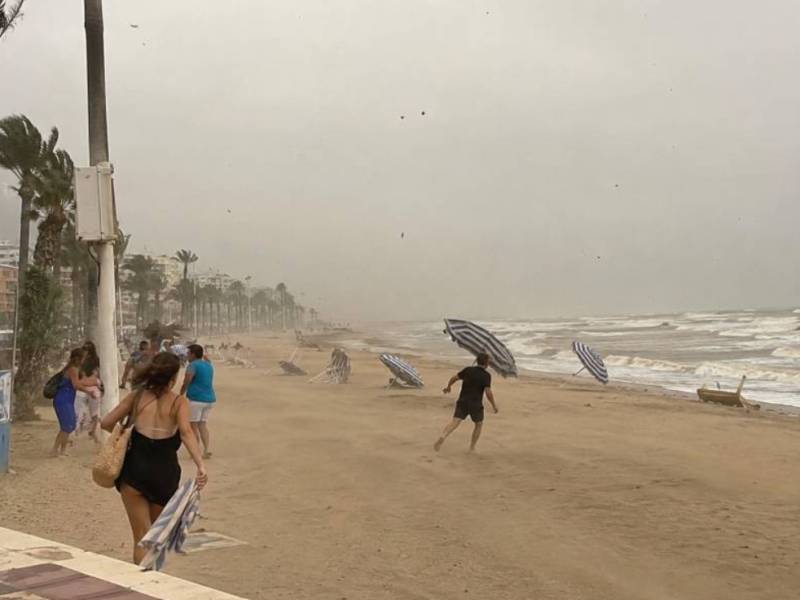
The Mediterranean bore the brunt of it, especially the Balearic Islands, Cataluña and Murcia, although the Valencian Community and parts of eastern Andalucía were also affected.
In Mallorca, a 63-year-old woman died on Wednesday September 9 after becoming trapped under a vehicle during a sudden surge of floodwater in Felanitx. She'd left home for work when she apparently slipped or fell in the street during the downpour, and with the water around two palms deep, the force of the current is thought to have stopped her getting free. Neighbours found her and raised the alarm, and the Guardia Civil is now investigating the circumstances surrounding her death.
The storms brought plenty of other disruption to the Balearic Islands too. Between 10am and 4pm on Wednesday, the 112 emergency service took 119 incident reports across the islands, 100 of them in Mallorca alone. Fallen trees and flooding were the main issues, with 36 incidents involving trees and 31 involving flooded buildings, businesses or roads, alongside debris on roads, damage to public property and some interruptions to basic services. Rainfall reached almost 50 litres per square metre in places, while Capdepera recorded wind gusts of 109 km/h, and gusts of up to 94 km/h were recorded at the University of the Balearic Islands.
Mallorca wasn't the only place to feel it. In Cataluña, torrential rain forced temporary travel restrictions and the suspension of classes and non-urgent healthcare in five areas, measures that were later lifted as conditions improved, although the Inuncat emergency plan stayed active.
La Quar in Berguedà recorded 60.4 litres per square metre, and the storms brought a risk of hail, very strong winds and even possible tornadoes in parts of the northeast of the region. High-speed rail services between Barcelona and Madrid were disrupted for around two hours after lightning struck overhead power lines, and around 30 flights were cancelled at Barcelona-El Prat Airport.
Murcia had a busy day for its emergency services too, with 182 incidents logged from 238 emergency calls, but thankfully no injuries were reported. Most involved problems on public roads, localised flooding, traffic obstructions and stranded vehicles.
The highest rainfall totals came in at 44 litres per square metre at El Reguerón-El Palmar, 39.3 in Murcia city and 33.7 at La Fica, with Beniel recording 25 litres and Pozo Estrecho 21.2. Several roads and access points in the municipality of Murcia had to be closed, and river entrances were shut as a precaution due to rising water levels, while emergency crews were also kept busy in Cartagena, Torre Pacheco and San Javier.
The Valencian Community was under weather warnings too, with the Alicante coast facing the highest risk. The storms followed several days of intense heat, after an Atlantic front moved in through Galicia on Tuesday September 8, crossed the country and brought heavy rain to the north before reaching the Mediterranean, where the unusually warm sea helped fuel the storms further.
Home truths
If you're hoping Spanish property prices might start coming back down, there isn't much sign of that happening just yet.
The biggest increases are being seen in second-hand properties, where prices rose 12.9% over the year. New-build prices increased by 7.4%. The shortage of homes available to buy remains one of the main reasons prices are continuing to rise, despite the number of sales falling slightly compared with last year.
Some areas have seen much bigger increases. Abanilla prices jumped 35% over the year, while Bullas was up 31.6%. On the coast, La Manga is now averaging €2,454 per square metre, followed by Los Alcázares at €2,144, San Javier at €2,117, Torre Pacheco at €2,112 and San Pedro del Pinatar at €2,003.
So, while the increase may have eased a little, the more important point for anyone trying to find a home is that prices are still going up, and rents aren't getting any cheaper either.
Murcia
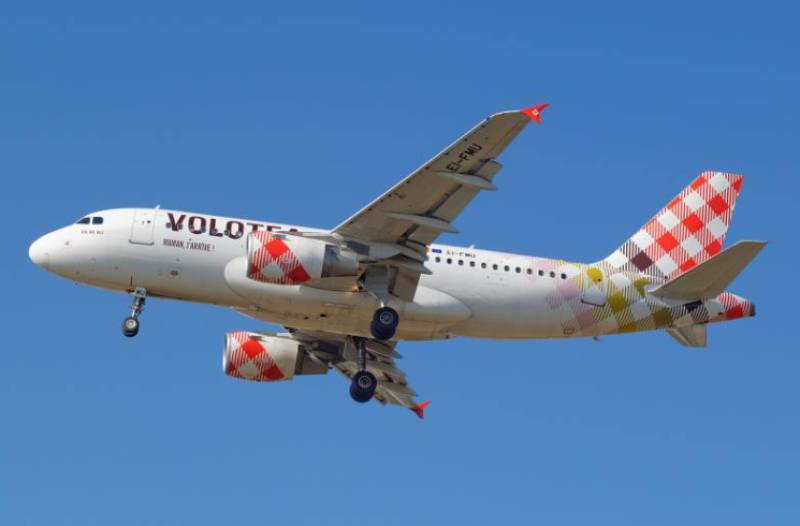
Over in Murcia, Volotea announced some big plans for Murcia Airport (Corvera Airport), and they could mean a lot more choice for passengers in the Region.
Volotea is considering opening a permanent base there, which the airline says could eventually allow it to increase the number of destinations from the current seven to as many as 20. It won't happen overnight, though. The airline is looking at the next two to four years to build its presence in Murcia gradually.
For those already using the airport, there are signs that things are heading in the right direction. Volotea currently flies from Murcia to Oviedo, Barcelona, Bilbao, Lille, Marseille and Venice. From November, Algiers will be added to the network, giving passengers another direct international connection.
Volotea is also looking at adding more destinations in northern Spain next summer. France is also performing particularly well, and it is likely to be a bigger focus than Italy.
The potential Murcia base is where things get particularly interesting. A base would mean having one or two aircraft permanently stationed at the airport, along with the staff needed to operate them. That would change how the airline plans its routes because more routes can be planned around those aircraft. So, while 20 destinations may still be a long way off, there is certainly the possibility of a much bigger choice of direct flights from Murcia in the years ahead. Watch this space!
The nests were found in La Manga and the Calblanque Regional Park, with teams closely monitoring them throughout the incubation period. The first nest was discovered in La Manga on July 2, when a loggerhead turtle came ashore and laid 75 eggs. Seventy of the eggs were left in the protected nest, while five were transferred to the El Valle Wildlife Recovery Centre, where they are being kept in an incubator as part of the conservation protocol.
The second nest was found on July 8 at Déntoles beach in Calblanque. This one was even larger, containing 92 eggs. Eighty-four remained in the protected nest, while eight were transferred to the El Valle centre. Those eight have yet to hatch and are continuing to be monitored in the incubator.
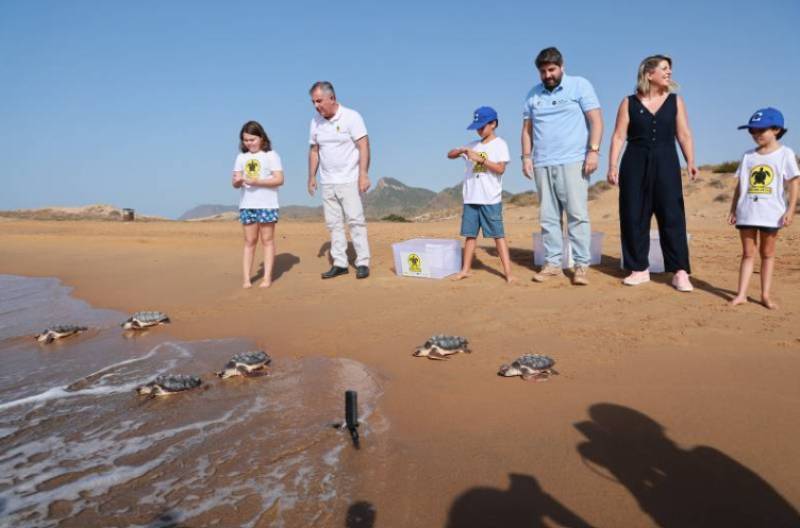
Each nest means weeks of surveillance, temperature monitoring, protection against possible threats and constant coordination between technicians, environmental officers and volunteers. Releasing hatchlings directly from the beach is a normal part of turtle conservation. It allows them to begin their lives in natural conditions and make their own way towards the sea after emerging from the protected nest.
The Region of Murcia has used the approach for several seasons, while similar conservation work is also carried out elsewhere along Spain's Mediterranean coast.
White storks can be seen circling above the recently harvested fields of the Altiplano, while bee-eaters pass overhead in groups and black kites use rising warm air to gain height without wasting precious energy. Swallows, house martins, short-toed eagles and rollers are also among the many species making their way south.
The Region of Murcia is an important part of these routes, with birds travelling across areas including the Altiplano, the Northwest and the Guadalentín Valley. Along the way, they need places to stop, feed and recover their energy before continuing south.
Wetlands, rice fields, ponds, cereal fields and other open areas can all provide vital rest stops. That makes the loss or alteration of these habitats a particular concern during migration, as birds rely on familiar places that may have been used for generations.
For some of the birds passing over Murcia, Africa is still a long way away and the journey isn't without its dangers. Power lines, habitat loss and a shortage of suitable places to rest can all pose problems for migrating birds, although conservationists and environmental workers continue efforts to reduce the risks.
The Guardia Civil said the two vessels were linked to the same type of illegal migrant transport operation, with both capable of carrying large numbers of people and fitted with multiple high-powered engines.
The four arrested men face a range of charges including facilitating illegal immigration, assaulting law enforcement officers, causing injury and property damage, piracy and illegal fuel transport.
There's plenty going on for anyone hoping to get out and about this weekend in the Region of Murcia, too.
If you fancy a free look around Los Alcázares, there's a 90-minute guided tour on the tourist train running on Saturday September 12, setting off from outside the Town Hall at 12pm, so get there about 15 minutes early. The route takes in some of the town's best-known sights along the inland shore of the Mar Menor, including the monument to fishermen, the monolith of independence and the historic Hotel de la Encarnación.
If you're around on Sunday instead, San Pedro del Pinatar has its own draw. The Parque de los Reyes de España is hosting the "La Sal" arts and crafts market on Sunday September 13 between 10am and 3pm, with local craftspeople showing and selling their work right by the northern tip of the Mar Menor. It's a nice excuse for a wander and a bit of bargain hunting while you think about freshening up your home for the autumn.
Spain

If you thought getting behind the wheel of a brand new car in Spain still meant handing over €20,000 or €30,000, that's not really the case anymore. Increased competition from Chinese manufacturers has pushed prices down across the board and forced the more established brands to compete on price too, and
there are now several new cars on the market for under €15,000.
At the cheapest end sits the Fiat Pandina at just €11,450, complete with mild-hybrid technology and an ECO label that comes in handy if you're driving somewhere with a low-emission zone. A handful of budget SUVs and superminis from brands like MG and Dacia, along with newer Chinese arrivals such as Livan, also come in comfortably under €15,000, while even old favourites like the Škoda Fabia have joined the party at €15,400 for buyers who'd rather stick with an established name.
Where a budget buyer in Spain used to be stuck picking between one or two tiny city cars, there's now a proper spread of small hatchbacks, SUVs and superminis to choose from, eight models in total for under €15,500, and the growing presence of Chinese manufacturers looks set to keep piling pressure on everyone else's prices too.
The change covers AVE, Cercanías, Media Distancia and Larga Distancia services across the country, but scooters still won't be allowed on Rodalies trains in Cataluña or Cercanías Euskadi in the Basque Country.
There are still some fairly strict rules to follow if you want to bring your scooter along. It needs to be an approved model registered with the DGT, complete with proper identification, valid civil liability insurance and a circulation certificate proving it meets the technical requirements.
Once you're on board, the scooter has to be switched off and folded up for the whole journey, and stored in the luggage area or somewhere it won't get in anyone's way. Aisles, doors, emergency exits and priority seating areas all need to stay clear, and charging the battery on board isn't allowed either.
Renfe will carry scooters free of charge as special luggage, as long as you're only bringing one other piece of hand luggage measuring no more than 55 x 35 x 25 cm.
The original ban came into force back on December 11, 2023, after several incidents involving scooter batteries. Renfe says it's comfortable reversing the decision now that new national rules on personal mobility vehicles are in place, covering registration, identification and insurance.
It's good news for commuters who rely on a scooter to cover the first or last stretch of a journey between home, work, college or the station, since pairing trains with scooters can make public transport a lot more workable for anyone who lives or works some distance away.
Renfe says it'll run information campaigns for passengers and brief its staff to make sure the new rules are followed properly, bringing its approach more in line with several other European rail operators who already allow scooters under similar safety conditions.
The Confederación Española de Sindicatos Médicos, or CESM, is pushing for a permanent stoppage as the next stage of its campaign against the Government's proposed changes to the Estatuto Marco, the rules that set out working conditions for staff in Spain's public health system.
There's no confirmed October date yet. The proposal goes to the union's strike committee on Thursday September 10, and CESM is hoping it gets the green light.

The union says the dispute is far from over and that doctors haven't dropped any of their demands. The push for an indefinite strike comes after the Government approved the Estatuto Marco in the Council of Ministers and sent it off to Congress.
CESM says that means its campaign now has to shift up a gear, with more pressure on politicians alongside legal action. The union is planning to meet parliamentary groups to find out where they stand on the bill, and is asking anyone opposed to it to file an amendment rejecting it outright. It's also preparing legal challenges against parts of the reform it believes breach European rules.
For patients, an indefinite strike is obviously the big worry. CESM president Lázaro admitted that industrial action would affect people using the public health system, and called on President of the Government Pedro Sánchez to show "responsibility and empathy", arguing patients would ultimately bear the brunt of a permanent stoppage.
At the centre of it all are doctors' working hours and how their conditions get negotiated. The proposed Estatuto Marco would cut the maximum on-call shift from 24 hours to 17, cap the working week at 45 hours and stop doctors being made to start a normal shift straight after an on-call period. Doctors, on the other hand, are calling for a 35-hour week and a separate professional statute that reflects the specific responsibilities of the job.
Health Minister García has defended the reform as a substantial improvement to working conditions and a long overdue replacement for the current framework, which dates back to 2003.
Alicante
NATS put out the alert at 5pm on Tuesday, and airlines scrambled to respond straight away. EasyJet and Ryanair were among the first to cancel flights, and the disruption spread quickly across routes between Alicante and various English and Irish cities. AENA even sent out an advisory to anyone with plans to fly to the UK as the scale of it became clear.
The good news is NATS confirmed the issue had been fixed just after 7pm, and Alicante Airport said things should be back to normal by the evening. Flights heading anywhere outside the affected UK routes carried on completely unaffected the whole time.
Some of the worst delays hit the Gatwick flight run by Vueling, Iberia and British Airways, which was meant to land at 7.50pm but didn't touch down until 9.28pm, while arrivals from Birmingham and Dublin, run by Ryanair and Aer Lingus, were also badly delayed.
The Manchester flight had the roughest night of all. Passengers sat on the Ryanair plane for a full three hours before it even took off, and by the time it finally got close to Murcia, the airport there had already shut for the night, so it was diverted to Alicante instead.
The whole episode is a reminder of how reliant Alicante Airport is on UK traffic. More than 70% of passengers using the Miguel Hernández terminal are British, so any hiccup with UK air traffic control tends to hit here harder than most other airports. If you've got a flight to London or Bristol in the next day or so, it might be worth double-checking with your airline before you head out.
While one part of Alicante's travel network had a rough night, another part is quietly getting a serious upgrade. Work on
the major transformation of Alicante railway station is ticking along on schedule, with the €20.2 million project due to wrap up by spring 2027.
Carried out by a joint venture led by Rover Rail, the scheme is designed to give the station a lot more room for long-distance and high-speed trains, opening the door to more services and better connections down the line.
One of the biggest parts of the project involves converting the existing conventional-gauge tracks to standard gauge, the type used by high-speed and long-distance trains. Four brand new standard-gauge tracks are being built too, which will eventually give Alicante Terminal up to 10 standard-gauge tracks in total, six more than it has right now.
The work kicked off back in July 2025 with earthworks, moving utilities and getting the groundwork ready for the new infrastructure. Right now, crews are converting tracks 10, 11 and 12 to standard gauge and renovating the platform in between, and once those are finished and tested, they'll gradually come back into service so work can move on to tracks 13 and 14 and the rest of the layout. It's all been carefully staged so the station can keep running throughout, with as little disruption as possible.
There's also work going on in the high-speed section, including new tracks 9 and 10 and a platform between them, while the station concourse itself is being expanded by around 990 square metres.
Alicante currently connects to three major rail routes, including the high-speed line to Madrid via Murcia, along with separate routes to Murcia and Valencia, and this expansion should give it a serious bump in capacity for high-speed and long-distance journeys.
Once it's all done, Alicante Terminal is expected to become one of Spain's biggest high-speed rail stations by capacity, sitting alongside Valencia and Málaga and just behind the major hubs in Madrid, Barcelona and Seville.
It all started when officers from the Torrevieja Main Station were out on routine patrol in a residential part of town and noticed him acting evasively, clearly trying to avoid them. That was enough to prompt a request for identification.
The document he handed over raised suspicions straight away, and once officers checked it properly, they found signs it had been forged. It was seized and the man was taken in, where investigators managed to establish his real identity and uncovered several outstanding legal claims against him.
The most serious was a European Arrest Warrant issued by German authorities over his alleged involvement in a case of voluntary manslaughter, involving assault and serious bodily harm, which the Guardia Civil confirmed through international police cooperation channels. On top of that, officers found two more outstanding court orders against him from a court in Almería.
He was arrested both for suspected document forgery and under the European Arrest Warrant, then brought before the Investigating Section of the Torrevieja Court of First Instance, which was on duty at the time. The extradition request has since gone to the Investigating Section of the Central Court of First Instance, part of the National Court, which will now handle sending him back to Germany.
Andalucía
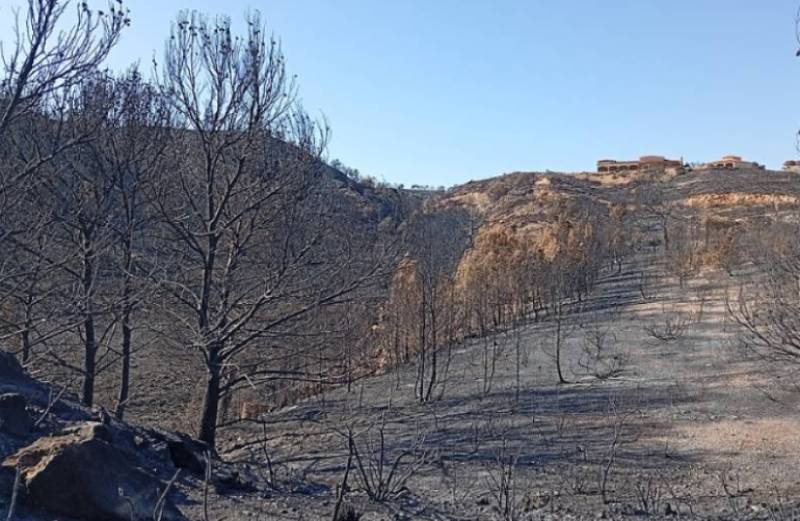
The woman, known only by her initials ML, had lived in Spain for more than 20 years, working as a carer for elderly people in Bédar, one of the areas worst hit by the fire. She suffered burns to around 40% of her body but managed to escape with the help of a passing vehicle, before spending weeks fighting for her life at the Virgen del Rocío University Hospital in Seville.
The fire broke out on the afternoon of Wednesday July 9 in the Almocáizar area of Los Gallardos, and rapidly became one of the deadliest wildfires of the century in Spain. It was declared extinguished on July 24, having burned through approximately 5,200 hectares across Bédar, Antas, Lubrín and Sorbas, by which point the death toll had already reached 13.
Of the 15 people now confirmed dead, 14 were foreign nationals. The majority were British, with three Belgian nationals, one French citizen and one American also among the victims, alongside one Spanish national.
A judicial investigation into the origin and circumstances of the fire is being handled by Court Number 3 in Vera, with at least eight relatives of victims now involved in the proceedings.
The landing itself was completed normally, the plane left the runway without incident, and all passengers disembarked safely. EasyJet confirmed the crew had requested the emergency landing due to a possible technical issue and were clear that the airport response was a routine precaution.
"The safety of our customers and crew is easyJet's top priority," the airline said. No passengers were reported injured.
Andalucía's president Juanma Moreno announced on Wednesday that €46.2 million will be allocated to repair the damage caused by the tremors, after meeting with the mayors of affected municipalities.
The swarm began with a 4.8 magnitude quake followed by 98 aftershocks in a single night, and by early September the series had passed 1,000 tremors in total. More than 700 people have been evacuated, nearly 1,200 building inspections carried out, and over 5,700 calls made to the 112 emergency line.
The largest chunk of the funding, €15.5 million, will go through the Andalusian Housing Plan to help homeowners with repairs not covered by insurance. Health centres will receive more than €10 million, and municipal infrastructure €7 million. For those with an eye on the region's heritage, €4 million has been earmarked for the Alhambra, specifically to stabilise structural elements including the Comares complex and parts of the Alcazaba.
Moreno confirmed the formal recovery phase began on September 8, and has asked the central government to declare the area severely affected by a civil protection emergency to unlock further national resources.

On a rather different note, and one that's guaranteed to divide opinion,
Andalucía is also making plans to expand bullfighting across the region. First Vice President Antonio Sanz used the occasion of the traditional Goyesca bullfight in Ronda, Málaga, to announce that the regional government is drawing up a new strategy, expected to be ready in the first quarter of 2027, to protect and promote the spectacle.
The most significant practical change would be making it easier to stage events using temporary or portable bullrings in towns that don't have a permanent venue, with the idea that some might eventually go on to build one.
Regional broadcaster RTVA is expected to screen more than 60 bullfighting events this year, up from 53 last year, and the government says peak audiences have reached around one in four television viewers in Andalucía.
"Andalucía is a bullfighting region, and so is its government," Sanz said. Health, safety and animal welfare requirements will remain in place under the new rules, the government stressed.
And so, whether you're a supporter or a critic, it's a debate that's not going anywhere.
You may have missed…
- More than 2,200 new homes planned to ease shortage in the Region of Murcia.More than 2,200 new homes are set to be developed across the Region of Murcia over the next three years in a major private housing programme aimed particularly at young people and families struggling to buy their first home.
- easyJet launches autumn and winter sale with up to 20% off flights from Spain.
If you’re already thinking about getting away once the summer crowds have disappeared, easyJet has launched a new sale with discounts of up to 20% on selected flights from Spain.
- Why the Mar Menor law is being changed and why so many people are angry
The controversial reform of Murcia’s Mar Menor protection law has taken its first major step forward, but the changes are already causing a furious row between the regional government, farmers, environmental groups and opposition parties.
- Invest in Your Healthcare in Spain with ASSSA.
Choosing good health insurance in Spain is an investment with both short and long-term benefits. For this reason, when you take out health insurance, you need to look at the guarantees it offer apart from the price... because your health is always the most important thing.
- Murcia company develops new product to calm pets during fireworks.
A Murcia-based biotechnology company has launched a new product designed to help dogs and cats cope with fireworks, firecrackers and other loud noises, as well as stress caused by travel or changes to their normal surroundings.
That’s the end of this week’s Spanish News Today Editor’s Roundup Weekly Bulletin. Thank you for reading and we’ll see you again next week.
Bye!









 Spanish News Today
 Alicante Today
 Andalucia Today

 In other Alicante province news, the Guardia Civil has wrapped up a rather more dramatic case in Torrevieja. The force has arrested a 43-year-old man there who was wanted by German authorities over an alleged homicide and assault causing serious injury. The man, a Romanian national, was also caught carrying a forged identity document, apparently in an attempt to hide who he really was.