



















 Spanish News Today
 Alicante Today
 Andalucia Today

A car is useful for the journeys that really need one. It is less satisfying when the journey is a short trip to the shops, a stop at school or a collection from the other side of town. By the time you have found parking, carried everything back to the vehicle and driven home, the distance travelled may have been the easiest part of the errand.
For people living in Murcia, Cartagena or one of the region’s coastal communities, the idea of making some local trips by bicycle is familiar. The difficulty often comes when an ordinary bike cannot carry what the trip requires. A weekly shop is different from riding to meet a friend for coffee. Taking a child to an activity raises questions that a solo ride does not. That is the gap a cargo e-bike is intended to fill.
It will not replace every car journey. Longer distances, unsuitable roads, large loads and difficult weather still make other forms of transport useful. But if a household’s second car spends much of its time covering short, predictable journeys, it is worth looking at those trips individually. Some may be easier to make on two wheels than expected.
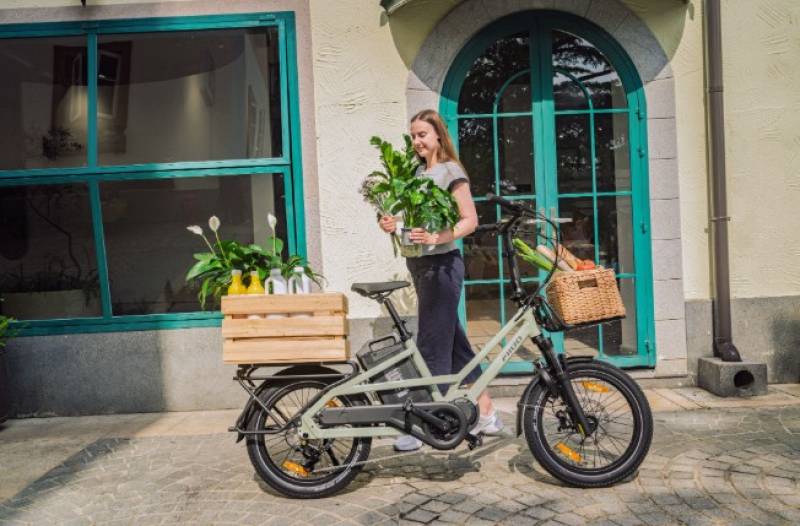
The most useful first step is to keep track of ordinary journeys for a week or two. Which trips are short enough to cycle comfortably? What do you carry? Where do you park at either end? A journey to a supermarket may involve several heavy bags, while a school run may require approved passenger equipment. Visiting a local market might mean arriving with an empty bike and leaving with much more than you planned to buy.
These details matter more than a broad promise that a cargo bike can ‘replace a car’. A bicycle that works well for shopping may not be approved to carry a passenger. Another may have the right rear platform but be too long for the space where it must be stored. Looking at actual journeys helps narrow the decision before you compare motors, batteries or prices.
Try to include the less obvious parts of each trip. Is there a steep street on the way home? Must the bicycle pass through a narrow gate? Can it be locked securely while you are inside a shop? The ride itself may be straightforward, yet storage and parking could determine whether you choose the bike on a busy morning.
A cargo e-bike is designed to carry more than the rider and a small personal bag. Depending on its layout, it may have an extended rear platform, a compact load-carrying frame or space for compatible baskets and other equipment. Electrical assistance helps the rider move that additional weight, particularly when setting off or climbing.
The layout affects how the bike feels in daily use. A longer rear platform can offer more room for equipment or approved passenger accessories, but it also takes up more space when parked and requires attention in tight turns. A more compact design may be easier to manoeuvre and store, although its carrying arrangement will be different. Neither is automatically the right choice for every household.
When comparing models in the Spanish Bicicleta Eléctrica de Carga category, check the stated total payload and the separate limit for any rear rack or platform. The total includes the rider, belongings, accessories and any passenger. A high overall figure does not, by itself, mean that someone may sit on an ordinary luggage rack. Passenger use must be expressly permitted for the model and fitted with the appropriate equipment.
The practical question is what you want to carry on a normal Tuesday, rather than the largest load the bike could theoretically transport once.
Fiido’s cargo range shows how different designs answer different daily needs. The Fiido T3 has a more compact frame suited to urban errands and households that need to think carefully about storage space. The Fiido T2 uses a longer rear platform for families carrying children and more substantial everyday loads, while the Fiido T3 Max offers another longtail option for those who need greater carrying capacity and the flexibility of a dual-battery configuration. These are starting points for comparison rather than interchangeable ways to carry a passenger: before choosing a model, check its total payload, the separate limit of the rear platform and which passenger accessories are approved for that exact configuration.
Shopping is a useful test because it combines weight, volume and frequent stops. It is easy to imagine fitting groceries on a bicycle until you consider fragile items, a large pack of water or the uneven shape of several shopping bags. Suitable baskets or panniers can make the load more manageable, provided they are compatible with the bike and remain within their limits.
Weight should be secured so it cannot shift suddenly while turning or braking. It is also worth practising with a modest load before attempting a full shop. A bike that feels familiar when empty may take more space to turn when loaded, and lifting or parking it can require more care.
For someone accustomed to driving between several shops, a bicycle may also change the shopping routine. Smaller, more frequent purchases can be easier to carry than one very large weekly collection. That arrangement will suit some households and not others. The aim is to identify trips where cycling is genuinely convenient, rather than to force every errand into the same method of transport.
A school run can be a compelling reason to consider a cargo e-bike, but carrying a child involves more than adding a seat. The bicycle must be designed for the intended passenger arrangement. The seat, footrests, wheel protection and other equipment must be compatible and correctly installed, and both the total payload and the limit of the passenger area must be respected.
A child moving while the bicycle is stationary can affect its balance. The rider also needs to allow for the added weight when setting off, turning and braking. It is sensible to practise first in a quiet area and become comfortable with the bike before using a busy road at school arrival time.
The same principles apply when considering an adult passenger, but permission to carry a child does not automatically mean permission to carry an adult. Check the manufacturer’s instructions for the exact bike and accessory arrangement. If that information is unclear, resolve it before carrying anyone.
A well-chosen route matters as much as the bicycle. The shortest way to school may include an awkward junction, while a slightly longer route may feel more manageable with a passenger. A daily journey should work reliably at the times when you will actually make it.
Battery range is often presented as a single distance, but everyday riding is rarely identical to a test run. A heavier load, repeated stops, hills, wind and a higher level of assistance can all change how much energy a trip uses. This matters when a bike may be used for several errands before returning home.
Instead of asking only for the greatest possible range, estimate the distance of a typical day. Include the return journey and any likely detours. Find out where and how you would charge the battery, then leave a sensible margin rather than planning to arrive home with almost none remaining.
Fiido’s Spanish cargo range includes models with different frame layouts, battery arrangements and carrying capacities. Those differences are useful when matched to a household’s journeys. A family doing short urban trips and storing the bike in a limited space may prioritise different features from someone carrying heavier loads over a longer route. Manufacturer range figures are a starting point for comparison, not a guarantee for every loaded journey.
A cargo e-bike needs somewhere practical to live. Before buying, measure the gate, hallway, lift or storage area it must pass through. Consider whether it can be moved comfortably when the battery is removed, if that is an option, and whether there is room to fit or remove bags and passenger accessories.
Security deserves the same advance planning. Think about the places where you would leave the bike during regular errands, not just overnight. If there is no suitable location outside the shops you use most often, that may change which journeys you choose to make by bike.
These questions can feel mundane beside specifications for motors and batteries. Yet a bike that takes too much effort to get out of storage is unlikely to become part of a daily routine. Convenience begins before the wheels start turning.
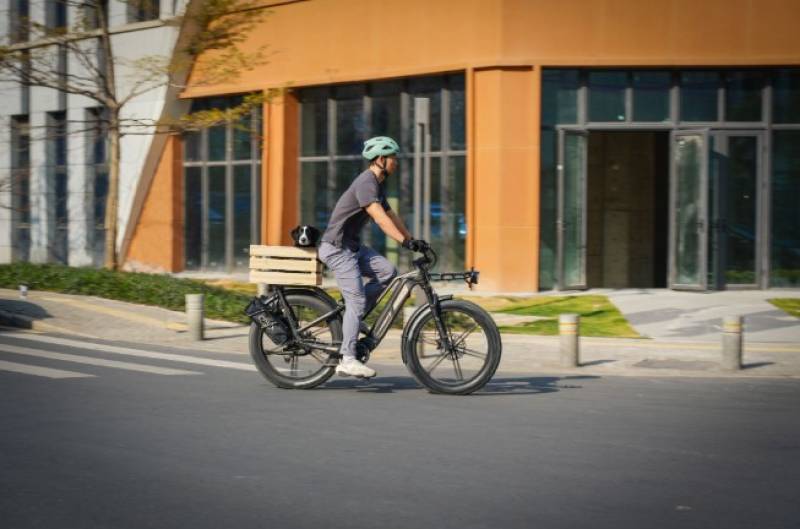
Extra carrying capacity is useful when it solves a recurring problem. If most trips involve only one rider and a small bag, a conventional bici electrica — the term many shoppers use in Spain for an electric bike — may be easier to store and entirely adequate. The occasional unusually large purchase can still be made by car or another means.
If, however, the same short car trips repeatedly involve groceries, equipment or a passenger, a cargo model deserves closer attention. Compare the complete journey: getting the bike out, riding it loaded, parking at the destination and bringing it home. That tells you more about its value than a list of specifications alone.
Replacing a car journey does not have to be an all-or-nothing decision. A household might still drive for a major shop or a trip across the region while using a bicycle for local errands several times a week. The useful measure is whether the change makes those particular days easier.
There is a certain appeal in leaving home without searching for car keys, finding a parking space or moving a vehicle for a journey of only a few kilometres. Yet that appeal lasts only when the bicycle fits the people, loads and roads involved.
A cargo e-bike is worth considering when it answers a clear, repeated need. It should be able to carry the intended load safely, fit the available storage space and feel manageable on the routes a household actually uses. Once those conditions are met, the question becomes less about whether it can replace a car altogether and more about how many everyday journeys never needed the car in the first place.