








- EDITIONS:
 Spanish News Today
 Alicante Today
 Andalucia Today
PROPERTY SEARCH

A Folding E-Bike in Murcia: How Useful Is It Beyond the Ride?
There is a moment at the end of a good cycle ride when the practical questions return. You have reached home, perhaps with a bag of shopping or after an afternoon exploring somewhere new. Now the bike has to pass through a doorway, fit into a storage space or go into the car for the journey back. How easy that part is can determine how often you choose to ride.
For people living in an apartment, spending part of the year in Murcia or travelling between towns, a folding electric bike can offer a useful answer. It takes up less space when stored and may be easier to combine with other parts of a journey. But the word ‘folding’ covers several different experiences. A bicycle can fold neatly yet remain heavy to lift. It may fit in a car boot but still be awkward to carry up a flight of stairs.
The best way to judge one is to look beyond the folded photograph. Think about where you will ride, what happens when the ride ends and how many times you will need to move the bike by hand.

Begin with the space you actually have
A folding bike is often chosen because a full-sized bicycle has nowhere convenient to live. That may mean a hallway, an apartment entrance, a storage cupboard or a corner shared with other household items. Before comparing models, measure that space, including the route needed to reach it.
A bike may be narrow when folded but still too tall to fit beneath a shelf. It might fit through the front door easily when unfolded, yet require a different movement to bring it inside when folded. If you must turn it in a tight corridor or pass it through a lift, those details matter as much as the final dimensions.
The same applies to a car boot. Measure the usable opening as well as the space behind it. A folded bike may fit within the boot once inside, but getting it through the opening can be the difficult part. If the plan involves taking the bike away most weekends, practise lifting it in and out rather than judging only by its measurements.
Weight deserves its own check. Electric bikes carry a motor and battery, so a compact model can still require a deliberate lift. Some allow the battery to be removed before moving the bike, which may make handling easier if the design and your routine permit it. Consider whether you can manage the lift comfortably on an ordinary day, after a ride, without help.
A fold should solve a regular problem
Folding is valuable when it removes a difficulty you encounter often. Perhaps you cannot leave a bicycle outside your apartment, or you want to take it by car to a suitable starting point and ride from there. In those situations, a smaller stored footprint can make cycling possible where a conventional bike would be inconvenient.
If you have secure, accessible ground-floor storage, the benefit may be less important. Folding and unfolding the bike before every short trip can become an extra step rather than a convenience. The right choice depends on your routine, not on whether the mechanism looks impressive in a demonstration.
Try walking through a normal day. Where would you unfold the bike? Would you need to carry it across a car park or only wheel it a short distance? When you return, will there be enough room to fold it without blocking a doorway? These simple questions are more revealing than a claim that a model folds ‘in seconds’. The mechanism may be quick, but the entire process also includes handling the battery, bags, lock and whatever else you took along.
What about public transport?
It is tempting to assume that a folding bicycle can travel anywhere a small suitcase can. Transport operators have their own rules, however, and an electrically assisted bicycle may be treated differently depending on the service. Restrictions can concern dimensions, batteries, busy travel periods or the requirement to keep the bicycle fully folded.
Check the current conditions for the exact train, coach or other service you intend to use before making the journey. Do not assume that a folded handlebar or lowered saddle makes a bike eligible as fully folded luggage. If combining transport with cycling is central to your plans, those rules should influence your choice of model from the beginning.
There is also the practical matter of moving through a station. Even where a folded e-bike is permitted, you may need to manage stairs, ticket barriers or a crowded platform. A bike that you can wheel comfortably for a short distance may be far less pleasant to carry. A trial journey close to home can reveal that difference before you rely on the arrangement for a longer trip.
The ride still has to suit Murcia
Storage may motivate the purchase, but you will spend most of your cycling time on the unfolded bike. A good fit matters. Check that the saddle and handlebar adjustments allow a comfortable position, and take a proper test ride if one is available. A bicycle that stores beautifully but strains your wrists or knees is unlikely to become a favourite.
Think about your regular surfaces too. Urban streets, smooth paths and occasional rougher stretches place different demands on tyres and handling. Smaller wheels can feel different from those of a larger bicycle, particularly over uneven ground. That does not make a folding bike unsuitable for a varied journey; it means the route and the bike should be considered together.
Electrical assistance is useful for a ride that includes hills or for a return journey when you are tired, but it does not remove the need to estimate distance. Manufacturer range figures come from particular conditions. Wind, gradients, rider weight and assistance level can change what you achieve in practice. Start with a familiar route, observe your battery use and leave a comfortable reserve.
Brakes, lights and tyres deserve the same attention they would on any bicycle. A compact frame is no reason to treat the bike as a casual accessory. It remains a vehicle that needs suitable maintenance and a secure place to park when you stop.
Two Fiido approaches to folding
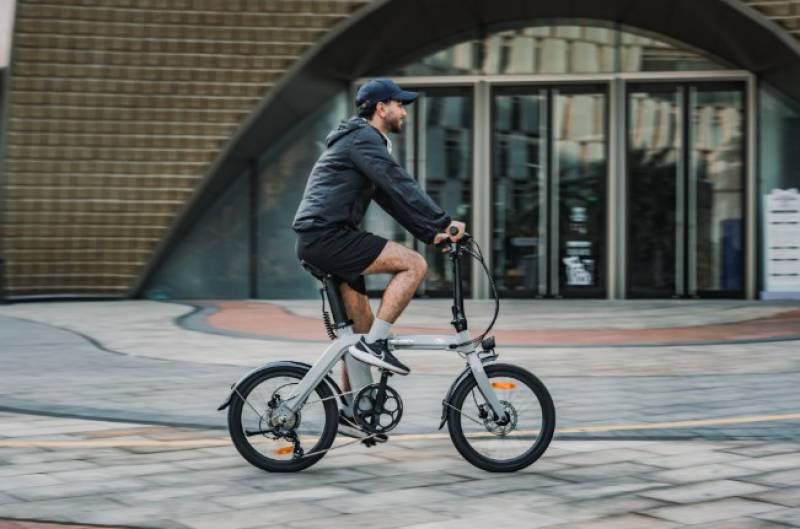
Fiido’s Spanish range illustrates why it helps to compare the complete journey rather than the fold alone. The Fiido D11 is aimed at riders who want a folding bike for regular city use, with a removable battery that offers flexibility when charging. The Fiido X takes a different design approach, with a folding frame and features intended for riders who value a compact, distinctive urban bike.
Both appear in Fiido’s Bicicletas Eléctricas Plegables range, but the better choice depends on the space and handling tasks you face. Compare their current folded dimensions, complete weights and battery arrangements against your own doorway, storage area and car boot. If lifting is part of the plan, a measurement on the page should be followed by a real attempt to pick up and move the bike where possible.
It is also worth asking how often you will use the folding function. Someone storing a bike beside a desk every working day may prioritise a different detail from someone folding it only for occasional weekend trips. The model that looks most compact on paper is not necessarily the one that fits your particular routine most easily.
A weekend away is a useful test
Imagine staying a couple of nights in another part of the region. You take the bike by car, ride from your accommodation to explore the surrounding area and return in the evening. At each stage there is a small decision: where to unload, whether you have somewhere secure to leave it, how far you want to ride and where you will charge the battery.
A folding design may simplify the first stage, but it does not answer the others automatically. Check with your accommodation before arriving with a bicycle. Find out whether it can be stored indoors and whether charging arrangements are suitable. If you intend to leave it outside during meals or visits, bring an appropriate lock and identify sensible parking places.
There is no need to turn the weekend into a test of maximum range. Often the advantage of bringing a bike is the freedom to make several short trips without repeatedly getting into the car. A morning ride for breakfast, an afternoon detour and an unplanned stop on the way back can be more satisfying than trying to cover the greatest possible distance.
When a conventional e-bike makes more sense
Folding mechanisms solve a space or transport problem. If you do not have that problem, they should not dictate your choice. A rider with ample storage who rarely puts a bike in a vehicle might prefer to compare the fit, tyres, carrying options and riding position across a broader bici eléctrica range.
Likewise, someone who regularly carries heavy shopping or a passenger needs to consider the bicycle’s approved capacity and equipment, rather than choosing a folding model mainly because it is easier to store. No single design can be the most convenient answer to every type of journey.
The clearest decision comes from describing three things honestly: where the bike will live, how it will travel when you are not riding it and what your normal rides look like. If folding makes those first two parts much easier without compromising the third, it may be a feature you use constantly. If it rarely leaves the garage, another type of bicycle may serve you better.
Make the whole journey easier
The appeal of a folding e-bike is not that it becomes small for a few seconds. It is that it may make cycling fit into a home, a car journey or a travel routine where a larger bike would be difficult to manage.
That advantage is real only when the bike can be folded, moved, stored and ridden comfortably by the person who owns it. Measure the spaces, check the transport rules that apply to your journey and pay attention to how the bike feels in your hands as well as on the road. A successful choice makes the end of the ride almost as straightforward as the ride itself.